Just One of the Random Conversations with Stanislav Stanislavovich
The conversation with Kozlovsky Stanislav Stanislavovich began when I stopped by his office to ask whether he had any sample images with defects in a welded pipe seam. He kindly gave me two boxes of images purchased back during Grudsky's time somewhere in Europe — but I'll write more about that in another article. I asked whether he might perhaps have, somewhere in his stashes (well, you never know?), images from real production in digital form. S.S. said he'd look for them now, and at the same time decided to tell me what he's working on.
(The beginning of the conversation was reconstructed from memory: I turned on the recorder later. And I did it because I want to have, in the form of recordings — at least voices — the stories of those people whom I respect.)
S.S.: So here's what I'm working on now. I'm building a dependence of dose on the anode voltage.
Me: And what about it? It's not linear?
S.S.: Mostly, of course, it's linear in this range, although at low doses everything depends very much on the dosimeter threshold.
(Then followed a story about how strongly the beginning of the graph depends on the dosimeter threshold.)
S.S.: There was also an interesting case. I flew to the Urals several times and took a dosimeter with me. As it turned out, during the climb the readings decrease, and then they start to rise.
Me: Interesting, why is that?
S.S.: The whole point is that 0.06–0.13 microsieverts is mainly radiation from the Earth. As you move away from the Earth's surface, the readings decrease. And then, when the atmosphere becomes more rarefied, external radiation starts to have an effect.
Me: Uh-huh… I see. And what were the readings at cruising altitude? 0.5 microsieverts?
S.S.: No, on the order of several microsieverts. Although there was another, more interesting case. During another flight, already after gaining altitude, the dosimeter showed solid zeros. I looked, thinking: what's going on? Could it not be working? I checked — no, it works. And then I look: suddenly 100 microsieverts, then after a while zeros again. I was surprised, and then I read in the literature. There are two types of cosmic radiation: solar and from deep space. Radiation from deep space consists of
(at this point I turned on the recorder)particles, but with very high energy. And when it enters the atmosphere, at an altitude of about a thousand kilometers or even higher, the so-called cosmic shower begins. That is, what is it? Suppose a proton flies in and encounters a rarefied medium. It begins to interact with it and, by virtue of its high energy, gives birth to a whole stream, as a rule, of fast electrons and gamma quanta. These particles, in turn, also give birth. This is called a cosmic shower. On Earth it covers an area the size of a football field.
Me (00:42): Not that much.
S.S. (00:43): Yes, not that much. So when you're flying at altitude and you sense this radiation, then a particle has entered the atmosphere, and you fly through this shower. Your dosimeter goes — bleep.
Me (00:59): But why did it show zeros? In theory, it shouldn't have shown zeros. That's really strange.
S.S. (01:06): Really strange. But as was written in that article, the following happens. You have two types of radiation, but they reach the Earth like this. If the stream from the Sun is high, then cosmic rays are deflected. That is, then you're measuring radiation from the Sun. It's more or less stable.
Me (01:32): But not zero. It couldn't have been zero.
S.S. (01:34): No, it's not zero. In this case you're measuring your 10 microsieverts. Now the Sun is inactive. These particles are flying. But they fly rarely. With very high energy. And when you don't hit a particle, you have zero. Because there's nothing from the Sun. And when you hit this cosmic shower, it spikes.
Me (02:01): I see, so it's like this, right? (I show with my hands something like a sinusoidal function)
S.S. (02:03): Pulsating, yes. So the world isn't simply arranged. I read, I thought, well, now I'll go up and measure what the radiation is. The first time nothing surprised me. Yes, elevated. What it is at 10,000.
Me (02:22): That was exactly when it was from the Sun, right?
S.S. (02:26): Yes. When there's no solar flare or flares are rare, when solar activity is low, then you're mainly irradiated by cosmic rays. It has this property that it gives birth to a shower that is limited. Well, roughly speaking, you fly through a football field. Bleep on you.
Me (02:45): And do I understand correctly that there's a dependence on whether you're flying, say, at night on this side of the Sun or here? That is, when you're here, then you'll surely catch cosmic radiation, but if here?
S.S. (02:58): Well, you see, I practically didn't have such a case, to also change location around the globe. Well, I flew to the Urals twice, and twice I ended up in a different situation. Then I figured it out, there's even a graph drawn such that when radiation from the Sun increases, cosmic radiation falls, then this one.
S.S. (03:24): Sort of different magnitude. But in principle it's still greater than on Earth. But only from deep space, which comes, it's in these bursts, and there it's up to a hundred microsieverts.
Me (03:38): Well, that's already quite substantial, isn't it?
S.S. (03:40): Well, it's literally for about ten seconds there. Then you fly again, zeros stand. Again ten seconds.
Me (03:49): And what's our standard level for fluorography?
S.S. (03:55): Fluorography you get, nowadays it's mostly digital equipment, 25 microsieverts.
Me (04:02): Only 25? Yes.
S.S. (04:05): Well, do the math. The annual dose for group A personnel is 20 millisieverts. You, roughly speaking, get a thousand times less per image. But if you take a thousand images in a year, you'll get that much. But there's another danger. I never thought… After Covid I went and signed up for a CT scan, chose, moreover, a newer computed tomography machine so that sensitivity would be higher. And I was there for three minutes. They rolled me through. With this table. (unintelligible). 8 millisieverts. I think, damn, I got half the annual dose of group A personnel in three minutes. And then it all makes sense. A 2D image. It's 25 microsieverts. When you're in the tomograph, you get thousands of images. That is, a source and detector rotate around you. And in the end you get thousands of images. Well, multiply a thousand by 20. You'll get roughly that value, you'll already get millisieverts. But from this it follows that you shouldn't overdo CT, unlike MRI. MRI, UHF, there's nothing scary there. But CT is X-ray irradiation.
Me (05:35): That's interesting, by the way. For some reason I thought CT was roughly the same as MRI, just that they make you not 3D, but just like some single slice once.
S.S. (05:44): No, look, with CT, if your cross-section is made, you're lying on a table, you slide into this little gate. Around you rotates an X-ray tube that shines on you, and on this side there's a detector. It rotates at high speed. That is, the whole high-voltage part is there, no cables. And it goes like this.
Me (06:15): And during these rotations it takes various images?
S.S. (06:19): Yes, for each rotation it makes its own slice. Image. And so it goes through all the slices.
Me (06:25): Interesting, why use CT if there's a safer method like MRI?
S.S. (06:31): Yes, their detectability is different. MRI is based on the absorption of high-frequency radiation, UHF, mainly in hydrogen-containing substances. That is, water, a human is mainly made of water. That is, it shows soft tissues more or less well.
Me: Ah, so we won't see bones, right?
S.S.: Yes, but bones, details there, cracks in a bone you won't notice.
Me (06:59): So in MRI we don't look at bones. Only on CT can we see them, right?
S.S. (07:05): Yes. But MRI, on the other hand, allows you, for example, to find that you have inflammation in a joint, an area of increased density appears around the joint capsule. On MRI this is visible, on CT with difficulty. That is, they are complementary.
Me (07:24): I see. They cover different areas, it turns out.
S.S. (07:30): Well, why is an X-ray image taken? Why? Because… During the period of pulmonary diseases, so-called calcification occurs. Calcium inclusions appear there in the lung tissue.
Me (07:48): I see. And they, precisely, won't be visible on MRI.
S.S. (07:52): On MRI they're not very well visible.
Me (07:54): I see.
S.S. (07:55): On MRI, diseased joints. The gastrointestinal tract is well examined on MRI.
Me (08:03): I recently had an MRI, and it turned out I have a tumor in my inner ear, benign, a so-called neuroma. It's probably, perhaps, in my case…
S.S.: Does it affect hearing?
Me: Yes, as a complication after Covid, possibly. Because it arose right after Covid for me, and what happened? I started having noise in my ear.
S.S. (08:28): All the time?
Me: All the time.
S.S.: I've had noise in my ear for 10 years already.
Me (08:32): Same with me.
S.S. (08:33): I went to a doctor, well, when I discovered it, right now I'm sitting, there's such a quiet whistling, sometimes it's loud. I went to a doctor, I say, this and that. I went to "Pervy Med," through connections there. Well, she looked, everything: "Yes, well, what can I say. Your nerve is activated like that." And she says: "Well, what to do? Well, when the nerve dies, well, it'll disappear." So for 10 years it hasn't died.
Me (09:04): Well, maybe in your case it's, so to speak, under-investigated, because I went to an audiologist, they did all the tests, measurements there, and said: "No, your ears are fine, we need to look inside." And they recommended an MRI. And on the MRI it turned out that I have a tumor there in the ear canal on the nerve. That is, the canal is blocked. Yes, the canal on the nerve, this very canal, say, here's the nerve. And on this nerve a tumor appeared. And it sort of pushes and presses on the nerve itself.
S.S. (09:39): I see, there's irritation that arises from this nerve in the form of hearing.
Me (09:45): Yes, and on the MRI that's what was found out. And, so, then I was advised to resort to radio… Well, there's such a technique, like, with radiation they make this tumor break down.
S.S. (10:01): UHF radiation, probably?
Me (10:03): No, radiation. It's called gamma knife. And, so, it consists in the fact that you're placed in an apparatus similar to an MRI. Your head is fixed, so that you…
S.S. (10:17): Well, of course.
Me (10:17): Right, and, accordingly… Focused beams. Focused beams, but how do they do it? They accumulate in the needed point by rotating these beams. That is, they shoot many times, as it were, in the needed direction. That is, through one point it passes many times. Yes, and it turns out that overall across the brain your dose is small, but at this point it's considerable.
S.S. (10:41): Well, the same thing is used in treating brain tumors. This, I know, was developed in Gatchina. There's an accelerator at GeV. And so the GeV beam, a person is seated in a chair. The head is also fixed. The beam hits one spot. The beam can't be turned, because the accelerator is huge. And the chair rotates around this point. And in the end the proton beam passes many times through a local area. By the way, also interesting, I read…
Me (11:19): And what is this for, also for similar cases?
S.S. (11:21): For brain tumors. Yes (unintelligible). An expensive thing, because the accelerator costs crazy money. A whole staff services it too. Uh-huh. Interesting, I once read about the value of 20 millisieverts per person. I thought, where does it come from? Why 20 millisieverts? It comes from the following premise, that if you work for 50 years, getting 20 millisieverts each year, then at the end of this term, as I understand it, if you started at 20, you finished at 70. And every year you worked with such a dose. Then you get a dose on the order of 1000 sieverts… No, not 1000 sieverts, on the order of a sievert, it seems, which should lead to some oncological disease.
Me (12:23): Statistically, yes?
S.S. (12:25): Yes. But the following is still being debated. Some claim that if you receive small doses, then you have an effect.
Me (12:38): The body manages to recover, right?
S.S. (12:40): Yes, a recovery effect. Others claim that no, the dose accumulates.
Me (12:44): That's… But the first seems more logical to me, honestly. That the body somehow manages to…
S.S. (12:52): Well, I'd put it this way. The truth, probably, lies in the middle. Something recovers, and something doesn't.
Me (12:58): Although I've heard that radiation, when it affects the body, destroys DNA, which is not subject to restoration.
S.S. (13:08): I've heard that too. There is that. But here, too, at small doses it turns out there's a beneficial effect. In essence, some theories say that the entire evolution of life on Earth is connected with a certain type of irradiation that changes the structure of DNA, but natural selection fixes good traits, and bad ones, as they say, go into care.
Me (13:36): Yes, that also sounds logical.
S.S. (13:38): If you exclude this thing, then it's unclear how the improvement of not an individual but a species occurs.
Me (13:45): That is, it's unclear at whose expense DNA should then change.
S.S. (13:49): Yes. You have a factor that affects DNA, but it leads to both positive results and negative ones. Well, roughly speaking, you became taller, became stronger, more aggressive. That's a plus. And in the opposite direction it's a minus. But the minuses, naturally, don't survive in the environment.
Me (14:14): Well, yes.
S.S. (14:16): Therefore here everything works on statistics, not on the specifics of a particular person. That is, you can't apply all these things to one person. Well, that is, one fact is that those who visited the Chernobyl zone, well, there was an elevated radiation dose there, of course. I'm not talking about the firefighters and so on. Those died in the first days.
S.S. (14:45): I was there. In Moscow on the 26th.
S.S. (14:54): I was in Moscow on April 26th. I'm walking to the Kurchatov Institute.
Me (15:01): That's the moment of the accident, it turns out?
S.S. (15:02): Yes. The 26th and 27th. So on the 27th I left for work at the Kurchatov Institute. Early, around 9 o'clock I was walking. I look, there, to one facility. Two Ikarus buses are pulling up. I'm still thinking: excursions, so early, usually they don't conduct them. Then people come out of there, two are supporting one, he can barely drag his legs.
S.S. (15:32): And such a procession goes from the bus to the building. Well, I asked the guys, they say, yesterday there was an accident in Chernobyl. And these were brought the next morning already, the firefighters. They lived there for about 6–7 days.
Me (15:47): So you were literally a witness, you saw those people who were being taken out of there?
S.S. (15:51): Yes, we saw them. It happened that I was walking to work, and they were being led out of the bus. But they died in the first 6–7 days right there.
Me (16:00): Well, there, yes, of course. They received such doses that…
S.S. (16:05): Beyond limits. Moreover, they were walking, some were coughing up blood. Why? Because they mainly received beta radiation and burned their mucous membranes. That is, there was already… Such an effect. That is, the mucous membrane was damaged so much that it stopped functioning. And then, of course, all this nasty stuff was spread around…
S.S. (16:32): I remember our guys worked at train stations, checking with dosimeters. And that's when I first learned, for example, that a lot of people in May were transporting tea from Georgia. And in sacks, to the north. I had never imagined before that someone transports tea. The tea was contaminated.
Me: Tea? How is that connected with tea?
S.S. (17:02): It's connected with tea like this: the Chernobyl cloud went in some directions under the action of the wind. By the beginning of May it had reached Georgia.
Me (17:11): Ah… Georgia? But I thought it went north.
S.S. (17:14): Well, one part went there. There were many. And there it fell as precipitation on a tea plantation.
Me (17:21): Wow, really.
S.S. (17:25): A woman with a little girl was taken off. All their clothes were contaminated with radiation.
Me (17:32): Horrible.
S.S. (17:32): Then we started questioning her. She says, we live near the fire station. The firefighters came back from there and washed the trucks with a hose. That is, people didn't observe safety precautions. But they lived nearby, so they came under this nasty stuff.
Me (17:54): And when you were walking to work, you learned about this accident and, of course, that day did you somehow discuss it with colleagues?
S.S. (18:06): Well, no one really knew the details yet. Various hypotheses were put forward. Including those that were, as it were…
Me (18:13): And were you by any chance involved in some commissions about what to do with this accident?
S.S.: It was all closed.
People
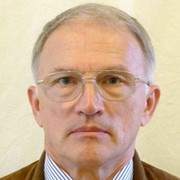
Kozlovsky Stanislav Stanislavovich — Candidate of Physical and Mathematical Sciences, Associate Professor at the Higher School of Fundamental Physical Research, and also project manager for radiography at "Unitest-Rentgen."